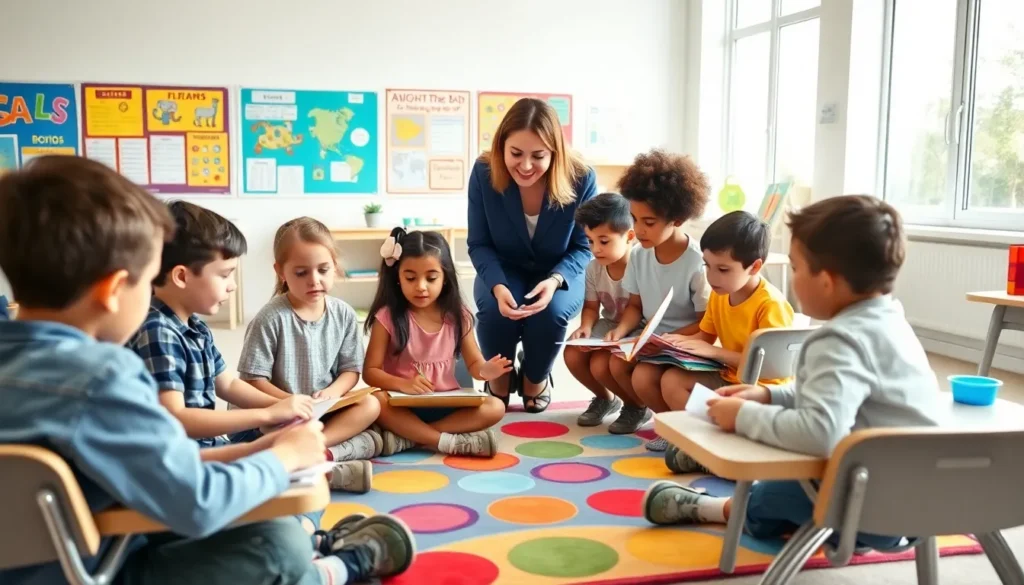
Ever wondered how old kids are when they start filling their backpacks with lunchboxes and crayons? If so, you’re not alone: it’s a classic question that many parents and caregivers ponder. Understanding the age of elementary school children not only helps you know when your child might be heading to school but also sheds light on their developmental milestones. So buckle up as we jump into the age groups, the grades involved, and even a sprinkle of humor along the way.
Understanding Elementary School Grades

In the U.S., elementary school typically includes kindergarten through fifth or sixth grade. It generally serves ages five to eleven, though this can vary slightly depending on the state or school district.
Kindergarten usually marks the official start of a child’s educational journey. Here, kids begin learning basic skills, not just how to tie their shoes.
From there, they progress through the grades, gradually tackling more complex subjects as they grow. Each grade level is structured to build upon what they learned the previous year, creating a comprehensive educational framework. So, what does this look like in terms of age?
Typical Age Ranges By Grade Level
Here’s a quick breakdown of kids’ ages by grade level in elementary school:
- Kindergarten: Ages 5-6
- 1st Grade: Ages 6-7
- 2nd Grade: Ages 7-8
- 3rd Grade: Ages 8-9
- 4th Grade: Ages 9-10
- 5th Grade: Ages 10-11
Of course, your mileage may vary. Not every child fits neatly into this age range. Some may start kindergarten at four years old if they’re ready. Others might begin a year later, but both paths are perfectly okay. Each child develops at their own speed.
Factors Influencing School Start Age
Several factors can influence when children start elementary school.
Variations In Elementary School Systems
Some parents choose to hold their kids back a year before starting kindergarten, especially if they believe their child might benefit from additional maturity. This can commonly happen in areas where preschool is not readily available.
Others might enroll their children earlier, particularly if they have a strong educational foundation from home.
Local education policies also play a significant role. Some states have specific cut-off dates by which a child must reach a certain age to start kindergarten, affecting many families. Keep in mind that school readiness often involves not just age but social skills and emotional maturity as well.
Impact Of Age On Learning Development
The age at which a child starts elementary school can have a significant impact on their learning experiences. Younger children in a classroom may struggle more with focus and sitting still during lessons when compared to their slightly older peers. This discrepancy can affect both academic performance and social relationships.
On the flip side, older children in the same grade may find the curriculum easier and might take on leadership roles in activities more readily. For instance, it’s not uncommon for older kids to assist younger ones in group projects or classroom activities, eventually fostering a sense of community and collaboration.
Understanding these variations not only helps parents make informed decisions but also aids educators in creating inclusive environments that cater to diverse learner profiles.